







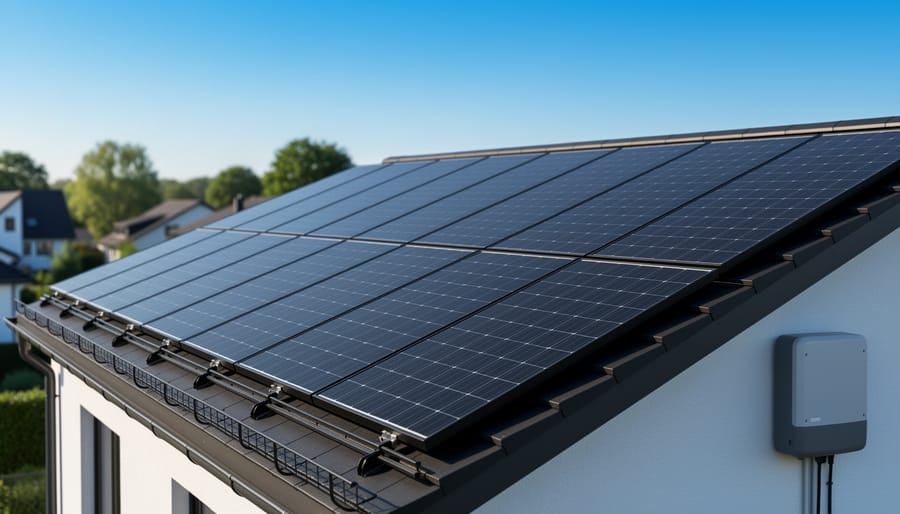
A solar power system for your home consists of five essential components working together: solar panels that capture sunlight, an inverter that converts DC electricity to usable AC power, a mounting system to secure everything in place, a monitoring system to track performance, and optionally, a battery storage unit for backup power. Think of it like designing your dream kitchen. Just as you wouldn’t choose a range without understanding how it connects to your home’s gas or electric lines, selecting solar equipment works best when you grasp how each piece fits into the bigger picture.
Right now, homeowners eager to reduce energy bills and embrace sustainable living face a dizzying array of solar options. The good news? Understanding the core components demystifies the entire process. Each part plays a specific role, much like ingredients in a favorite recipe. Solar panels are your power generators, the inverter acts as the translator between your panels and home appliances, and the mounting system provides the sturdy foundation that weathers every season.
Whether you’re preparing for installer consultations or simply want to speak confidently about your investment, knowing these components helps you ask better questions, spot quality equipment, and avoid unnecessary upgrades. Let’s break down each element so you can approach your solar journey with the same confidence you bring to any home improvement project.
How We Selected These Components
When we put together this guide, we focused on the components you’ll actually meet during your solar journey, the ones installers will discuss and your system genuinely needs to work. We skipped overly technical parts that stay hidden in wiring closets and concentrated instead on elements essential to converting sunshine into usable power for your home.
Our selection criteria centered on three things: components that play a critical role in system function, parts relevant to typical residential installations in 2026, and items you’ll make decisions about when planning your setup. Think of this as your practical checklist for understanding quotes from installers and knowing what questions to ask. We wanted to demystify the solar shopping experience, so you can approach conversations with confidence rather than feeling overwhelmed by technical jargon.
1. Solar Panels: The Heart of Your System

When you picture a solar power system, the solar panels are what you see, those sleek blue or black rectangles that transform your roof into a personal power plant. These panels are where the magic begins, using photovoltaic cells convert sunlight into direct current electricity. Think of them as the workhorse of your system, quietly generating power every time the sun shines on your home.
Most homeowners today choose between two main types of panels. Monocrystalline panels feature that uniform black appearance and offer higher efficiency, meaning they produce more power per square foot. They’re the premium choice if you have limited roof space or simply prefer their streamlined look. Polycrystalline panels have a blue, speckled appearance and typically cost less upfront, though they need slightly more space to generate the same amount of power. Both types will serve you well for decades, so your choice often comes down to roof size and aesthetic preference.
Speaking of aesthetics, your panels will be visible from the street, so it’s worth considering how they’ll look on your particular roof. Modern installation techniques can create clean, symmetrical arrays that many homeowners find attractive, some even see them as a badge of environmental responsibility. Your installer will evaluate which sections of your roof get optimal sun exposure throughout the day, typically favoring south-facing slopes in the Northern Hemisphere. Shading from trees, chimneys, or neighboring buildings will factor into placement decisions, because even partial shade on one panel can affect the performance of your entire array.
2. Inverter: Your Power Translator
Think of your inverter as a translator at a dinner party, your solar panels speak one language (direct current, or DC), but your home only understands another (alternating current, or AC). Without this translator, the energy your panels collect from the sun would be useless to your coffee maker, TV, and all the appliances that keep your household humming.
Inverters convert DC to AC electricity in real time, making it compatible with your home’s electrical system and the utility grid. This behind-the-scenes hero typically lives tucked away in your garage or mounted on an exterior wall, working quietly while your panels get all the glory on the roof.
You’ll encounter three main types when planning your system. String inverters connect all your panels in a series, offering a cost-effective solution that works beautifully when your roof gets consistent sunlight throughout the day. They’re the traditional workhorse of residential solar. Microinverters take a different approach, attaching individually to each panel. This setup shines when you have shade issues or panels facing different directions, since one shaded panel won’t drag down your whole system’s performance. Hybrid inverters add battery management capabilities, handling both solar power conversion and energy storage coordination if you decide to add batteries now or later.
Most homeowners starting their solar journey in 2026 choose between string and microinverters based on their roof situation and budget. Your installer will recommend what fits your specific setup, but understanding these options helps you ask the right questions and feel confident in your investment.
3. Mounting and Racking System: The Foundation
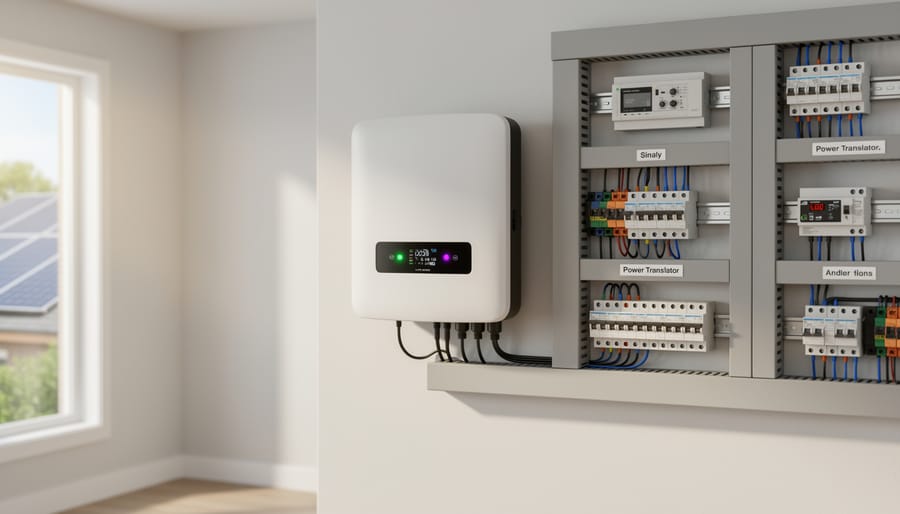
Think of your solar panels like a beautiful pergola or deck addition, they need a solid foundation that can weather decades of sun, rain, snow, and wind. That’s where mounting and racking systems come in. These aluminum or stainless steel frameworks anchor your panels securely to your roof (or ground, if you have the space) and hold them at the optimal angle for capturing sunlight.
Most homeowners with sloped roofs use roof-mounted racks that attach directly to rafters beneath your shingles. The mounting hardware penetrates your roofing material, but don’t worry, professional installers use specialized flashing and waterproof seals to prevent leaks. Quality racking systems are engineered to withstand hurricane-force winds and heavy snow loads, often carrying warranties of 20-25 years that match your panels’ lifespan.
The beauty of a well-designed mounting system is that you’ll barely think about it once it’s installed. Modern racks accommodate different roof types, asphalt shingle, tile, metal, even flat roofs, with appropriate attachment methods for each. Ground-mount systems, popular for homeowners with large yards, use concrete footings or ground screws and offer easier maintenance access since you’re not climbing onto the roof.
During your installer consultations, ask about the racking brand and warranty. A sturdy mounting system protects your investment by keeping panels stable and properly positioned for maximum energy production year after year. It’s the unsung hero that lets your solar system perform reliably through all seasons.
4. Battery Storage: Energy Independence (Optional but Increasingly Popular)
Battery storage has become the feature that homeowners get genuinely excited about once they understand what it does. Think of it as your personal energy savings account: during sunny days when your panels produce more electricity than you’re using, that excess power flows into your battery system instead of just going back to the grid. Then, when the sun sets or during a power outage, you draw from your stored energy to keep your lights on, your refrigerator running, and your home comfortable without relying on the utility company.
The appeal goes beyond convenience. Many homeowners are drawn to batteries because they offer real resilience during storms or grid failures, which have become more frequent in many regions. Instead of losing power when your neighbors do, your home stays energized using the sunshine you collected earlier that day. For those in areas with time-of-use electricity rates, batteries also let you avoid peak pricing by using stored solar power during expensive evening hours.
That said, batteries aren’t essential for everyone right now. If your utility offers generous net metering that credits you fairly for excess power, and outages are rare in your area, you might choose to start without storage and add it later as prices continue dropping. The technology keeps improving and becoming more affordable each year. Battery systems typically add several thousand dollars to your installation cost, so consider your priorities: immediate backup power and maximum self-sufficiency, or a lower upfront investment with the grid as your nighttime partner.
5. Charge Controller: The Battery’s Best Friend

If you’ve decided to add battery storage to your solar setup, there’s an unsung hero working behind the scenes to protect your investment: the charge controller. Think of it as a smart guardian that stands between your solar panels and your batteries, carefully managing the flow of electricity to keep everything running smoothly.
Here’s what makes charge controllers so valuable. When your solar panels are producing more power than your home needs, that excess energy flows into your battery bank. Without a charge controller, those batteries could receive too much voltage, leading to overheating, reduced capacity, or even permanent damage. The controller steps in to regulate this process, ensuring your batteries charge at the optimal rate and preventing them from becoming overcharged.
You’ll encounter two main types: PWM (Pulse Width Modulation) controllers, which are more affordable and work well for smaller systems, and MPPT (Maximum Power Point Tracking) controllers, which are more efficient and better suited for larger battery setups. MPPT controllers can extract up to 30% more power from your panels, making them popular for homeowners serious about energy storage.
The beauty of a good charge controller is that it works quietly in the background, extending your battery’s lifespan from a handful of years to a decade or more with proper care.
6. Monitoring System: Your Solar Dashboard
Think of your monitoring system as the fitness tracker for your solar setup, it puts real-time data right at your fingertips and turns abstract energy savings into tangible proof of your smart investment. Most modern systems connect to your home Wi-Fi and sync with a smartphone app, giving you a detailed dashboard of your solar panel performance, energy consumption, and even weather impacts on production.
You’ll see exactly how many kilowatt-hours your panels generated today, which appliances are drawing the most power, and whether you’re sending excess electricity back to the grid or storing it in batteries. Many homeowners find themselves checking their solar app with the same satisfying frequency they’d check a garden’s progress, there’s something genuinely rewarding about watching the sun do its work and seeing those production numbers climb on a bright afternoon.
Beyond the feel-good factor, monitoring systems serve a practical safety net. They alert you to performance drops that might signal a dirty panel, a shading issue from new tree growth, or a technical hiccup that needs attention. Catching these problems early means you won’t lose weeks of potential production before realizing something’s off. Some advanced systems even provide historical data and predictive insights, helping you understand seasonal patterns and optimize your energy use around your solar generation. It’s the component that keeps you connected to your system’s health and transforms solar power from a set-it-and-forget-it installation into an active, engaging part of your home management routine.
7. Electrical Panel and Metering: Connecting to the Grid

Your solar panels and inverter work beautifully together, but they need a proper gateway to deliver power throughout your home and interact with your utility company. That’s where your electrical panel and metering equipment come into play, creating a seamless bridge between your new solar system and the existing electrical infrastructure you’ve relied on for years.
The electrical panel upgrade is often necessary when adding solar. Think of your home’s electrical panel as a distribution hub where incoming power splits off to various circuits serving different rooms and appliances. Your solar installer will add a dedicated breaker for your solar system, allowing clean energy to flow into this hub alongside (or instead of) utility power. Many older homes need panel upgrades to handle the two-way flow of electricity that solar creates, but this investment improves your home’s overall electrical capacity.
The real magic happens with your utility meter. In most areas, your traditional meter gets replaced with a bidirectional or net meter that tracks both the electricity you draw from the grid and the excess power your system sends back. On sunny afternoons when your panels produce more than you’re using, that surplus flows to the grid, spinning your meter backward (figuratively speaking with digital meters). Your utility credits you for this contribution, offsetting what you draw during evenings or cloudy days.
This arrangement, called net metering, transforms your relationship with the power company from pure consumer to active participant. Instead of watching your meter climb relentlessly, you’re now contributing clean energy to your community while building credits that reduce your monthly bills.
Common Questions About Solar System Components
You’ve invested time learning about each component, and now you’re probably wondering about the practical realities of living with a solar system. Here are the questions homeowners ask most often when they’re getting serious about going solar.
How long do solar system components typically last?
Solar panels usually come with 25-year performance warranties and often produce power well beyond that, while inverters typically last 10-15 years and may need replacement during your system’s lifetime. Battery systems, if you add them, generally last 10-15 years depending on usage patterns.
What kind of maintenance do solar components need?
Solar systems require surprisingly little maintenance, mostly just occasional cleaning of panels to remove dust or debris, and monitoring your system’s output through your app. Your inverter and other components are designed to work quietly in the background with minimal attention.
What happens to my solar system on cloudy days?
Your panels still generate electricity on cloudy days, just at reduced capacity (typically 10-25% of peak output). If you’re grid-connected, you’ll simply draw supplemental power from the utility seamlessly, and any battery storage you have can help bridge gaps.
Can I add components to my system later?
Yes, most systems can be expanded, though it’s easier and more cost-effective to size appropriately from the start. Adding panels or batteries later is certainly possible, but you’ll want to ensure your inverter and electrical setup can handle the additional capacity.
Which components represent the biggest cost?
Solar panels typically account for about 30% of total system cost, with the inverter, mounting equipment, and installation labor making up most of the remainder. Battery storage, if you choose to include it, can add significantly to upfront investment but offers energy independence many homeowners value.
These questions reflect the real concerns of homeowners just like you who’ve made the leap to solar. The beauty of modern solar systems is that they’re designed to be reliable, low-maintenance additions to your home that work quietly and efficiently for decades. Once installed, most homeowners find their solar system becomes an almost invisible part of daily life, except when checking that satisfying monitoring app to see how much clean energy you’re generating.