





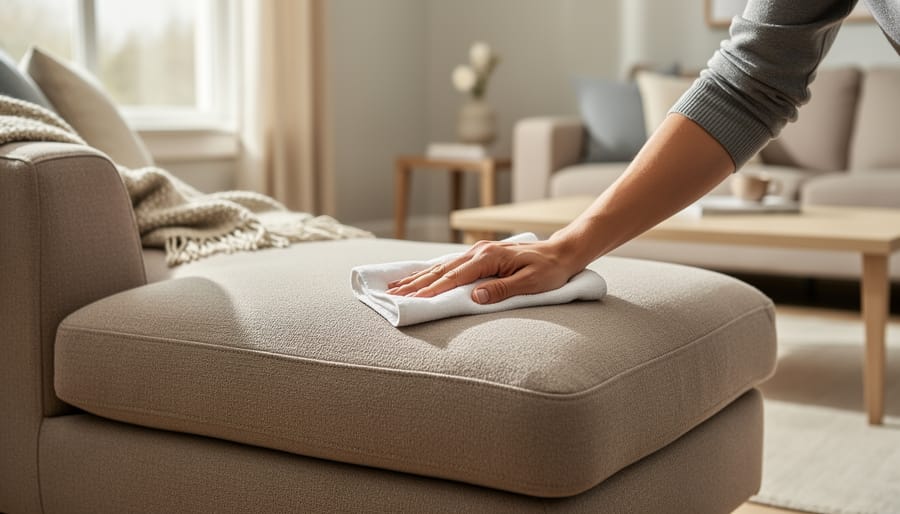
The best upholstery fabric is the one that matches how your household actually lives. Start with that, and the rest of the decision gets surprisingly simple. A family with a dog and a movie-night habit needs something different from a couple who sit down with a cup of tea once a day, and the right fabric for one can be a daily frustration for the other.
Think of it like choosing a cutting board or a quilting cotton. Looks matter, but you’re really buying for the work it will do. Performance weaves and tightly woven synthetics shrug off spills and claws. Linen and natural blends bring a soft, lived-in charm but ask a little more care. Leather ages beautifully, if you like a patina. Price follows durability and construction more than it follows beauty, so a pricier fabric isn’t always the wiser buy.
This guide walks you through what to weigh before you commit, how the main fabric types compare, which ones suit which lifestyles, and the mistakes that send people back to the showroom. We’ll also cover how to test swatches at home, because a fabric that looks perfect under store lights can behave very differently in your living room.
Let’s find the one you’ll still love in five years.
Start With Your Real Life: Key Buying Factors for Upholstery Fabric
Durability and Rub Counts, Decoded
Here’s the good news: durability comes down to one number you can actually find on a swatch tag. A “double rub” is one trip back and forth across the fabric by a machine, and the rub count tells you how many of those trips it survived before showing wear. Think of it as a stand-in for every time someone flops down after a long day. In the United States you’ll usually see the Wyzenbeek test, while European fabrics often list Martindale, so check which one you’re reading before you compare. A quick lesson in how to choose quality furnishings starts right here.
Here’s a simple way to match the number to your household (Wyzenbeek double rubs):
- Under 15,000: decorative use, like an accent chair nobody sits in daily.
- 15,000 to 30,000: general residential use, fine for most living rooms.
- 30,000 and up: heavy daily use, ideal for families, pets, and movie-night marathons.
One honest caveat: rub count measures abrasion, not stains or sun damage, so treat it as one clue rather than the whole story.
Cleaning Codes and the Stain Question
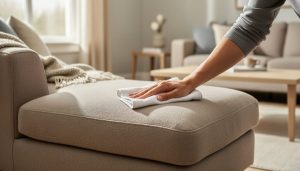
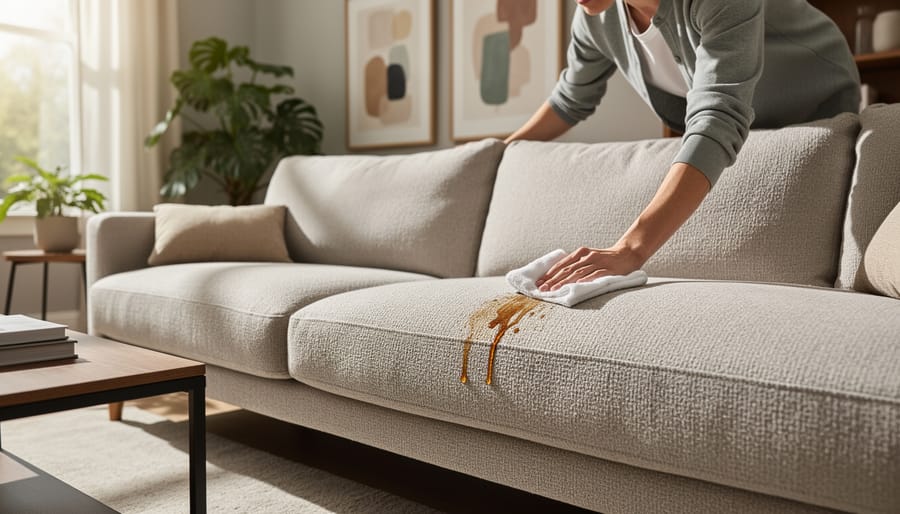
Flip over a cushion or peek under the seat deck, and you’ll usually find a little tag with a single letter on it. That letter is your cleaning code, and it tells you what you can safely use when someone tips a mug of cocoa onto the cushions.
Here’s how to read it:
– W means water-based cleaners are fine, so a damp cloth and mild soap will do.
– S means solvent only. Use a dry-cleaning product and no water at all.
– WS means you can use either water-based or solvent cleaners.
– X means vacuum or brush only, with no liquid cleaning of any kind.
If you cook and entertain in an open-plan space, a W or WS code is a gentle safety net for sauce splashes and wine. And if you’re still deciding on shape and scale, our guide to V shaped sofa fit pairs nicely with this one.
Swatches carry codes too, so check before you fall in love.
Sofa Fabrics Compared: Natural, Synthetic, and Performance Options
Natural Fibers: Cotton, Linen, and Wool
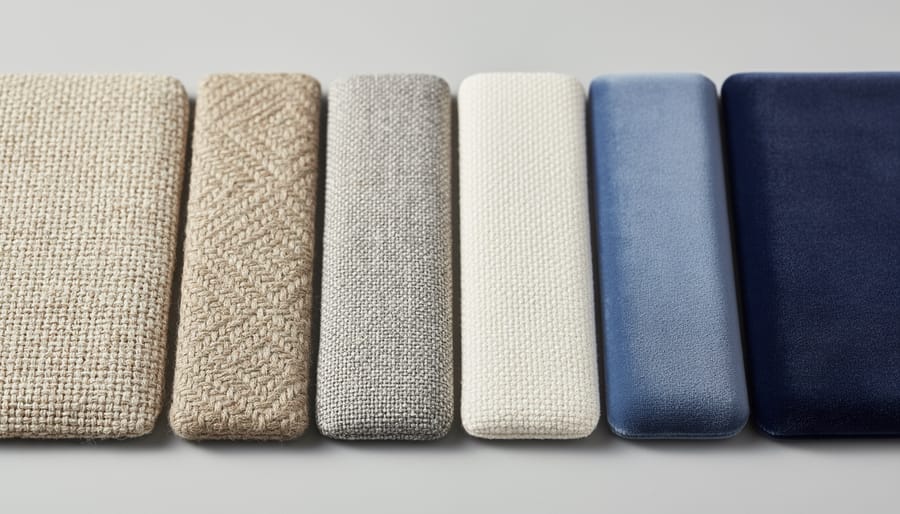
Natural fibers have a warmth that’s hard to fake. Cotton is soft, breathable, and easy to love, with a relaxed, lived-in look that suits casual family rooms. The trade-off is that it wrinkles, soaks up spills quickly, and can fade in strong sun, so a tight weave or a slipcover-friendly design makes everyday life easier.
Linen is the airy, collected-over-time choice. It feels cool against your skin and ages into a gorgeous, slightly rumpled softness, much like a quilt that’s been washed a hundred times. It does crease the moment you sit down, and it stains easily, so it’s best for adults-only rooms or anyone who finds that rumpled charm part of the appeal.
Wool is the quiet workhorse of the group. It’s naturally resilient, springs back from wear, resists wrinkling, and stays comfortable in both warm and cool weather. Blends add stain resistance and keep costs friendlier. Look for a tight weave, since loose wool can pill with heavy use.
Synthetics and Performance Fabrics: Built for Busy Homes
Synthetics have come a long way from the stiff, shiny fabrics your grandmother’s sofa might have worn. Today’s polyester is woven to look and feel remarkably like linen or wool blends, and it stands up to daily wear without complaint.
Microfiber is a favorite for families because its tight, dense weave resists spills and wipes clean easily. It also feels soft and suede-like, which makes it great for movie-night snuggling. Olefin (also called polypropylene) is nearly stain-proof and resists fading, so it’s a smart pick for sunny rooms or busy households.
Then there are performance fabrics, often solution-dyed, where the color runs through each fiber instead of sitting on the surface. That means spills and sunlight have a much harder time leaving a mark. Many of these weaves now have a nubby, textured look that rivals natural fibers.
Just remember, “performance” means easier care, not invincible. Always check the rub count and cleaning code.
Our Picks: Recommended Fabrics for Every Kind of Household
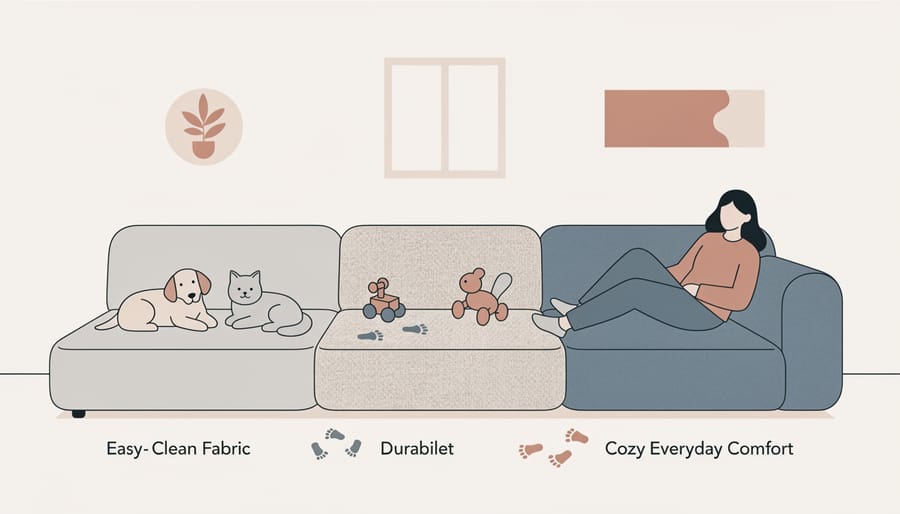
Every household has its own rhythm, and the right fabric should keep time with yours. Think of these pairings as starting points, not rules.
Picture a family with two small kids and a Friday movie night that always involves popcorn and a juice spill. They need a tight weave they can wipe down, which is why a performance fabric or a solution-dyed synthetic tends to win. Pet owners face a different challenge: claws and fur. A tightly woven microfiber sheds hair easily and resists snagging, while loopy bouclé or loose linen invites trouble.
If you love hosting, you want something forgiving that still looks polished after a dozen guests. A mid-tone performance weave with a little texture hides the inevitable crumb or wine splash. For a sun-drenched room, fading is the quiet enemy, and a solution-dyed fabric keeps its color far better than a standard dye. A formal living room is where you can indulge a bit, since it sees less daily wear and rewards a little luxury.
Here’s a quick cheat sheet:
- Young kids: performance fabric, because spills wipe away instead of setting in.
- Pets: tight-weave microfiber, because claws can’t catch and hair brushes off.
- Entertainers: textured mid-tone performance weave, because it hides crumbs and splashes.
- Sunny rooms: solution-dyed fabric, because the color is built into the fiber and resists fading.
- Formal spaces: velvet or a linen blend, because they bring depth and elegance where wear is light.
Once you’ve narrowed the field, think about the story your room already tells. If you have a favorite quilt draped over the arm, hold a swatch next to it and see whether the colors sing together or compete. A solid, softly textured sofa lets a busy patchwork quilt take center stage, while a subtle pattern can echo the tones tucked into your handmade throws. Let the sofa be the calm backdrop, and let your handmade pieces do the talking.
How to Test Swatches and Shop With Confidence
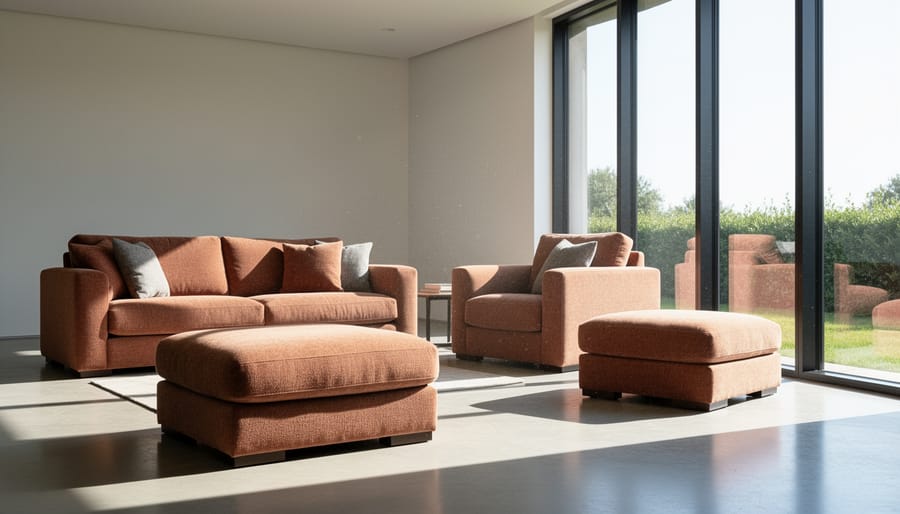
Order your swatches before you fall in love with a showroom sample. The process only takes a week, and it can save you years of regret.
Start with light. Tape each swatch to the sofa wall, or drape it over your current cushion, and look at it in the morning, at midday, and again under your evening lamps. A warm gray can turn green by dusk, and a creamy oatmeal can look flat under cool LED bulbs.
Next, get hands-on. Rub the swatch firmly with your palm, then scrunch it in your fist for ten seconds. If it springs back, great. If it stays creased like a forgotten napkin, expect that look on your sofa too. Flip it over and check the weave and backing. A tight, even weave with a sturdy backing generally holds up better than anything loose or flimsy.
Then play designer. Set the swatch beside your paint color, your rug, and a favorite quilt or throw. If you’re furnishing a smaller room, keep your compact sofa size in mind, since a bold pattern behaves differently on a petite frame than on a sprawling sectional.
Finally, test it the way real life will. Dab a little water on a hidden corner, or press a coffee-colored smudge in, and see how it cleans up.
Before you buy, ask the seller a few questions:
– What is the rub count, and is it Wyzenbeek or Martindale?
– What is the cleaning code on this exact fabric?
– What does the warranty cover, and does it include stains or only frame defects?
– What cleaning products do you recommend or forbid?
Upholstery Buying Mistakes to Avoid
Every one of us has made a sofa decision with our hearts first. It happens, and it’s nothing to feel bad about. Still, a few common missteps are worth knowing about before you spend real money.
The biggest one is choosing on looks alone. That gorgeous bouclé or pale linen might stop you in your tracks, but if nobody checked the rub count or the cleaning code on the tag, you could be signing up for pilling and permanent stains. A fabric can be lovely and still wrong for your household.
Skipping swatches is the sneakiest mistake because it feels like you’re saving time. Sun exposure is its cousin. A south-facing window will fade even sturdy fabrics over a few seasons, so think about where the sofa will actually sit.
Then there’s what you can’t see. A beautiful cover on a flimsy frame or low-density cushion fill will sag long before the fabric wears out. Ask about the construction, not just the cloth. And while you’re sketching your layout, our guide to 3-cushion sofa sizing and this sectional size guide can help you get the proportions right alongside the fabric.
Finally, “performance” doesn’t mean indestructible. These fabrics resist spills and wear impressively well, but a red wine puddle left overnight or a cat with strong opinions about scratching can still win. Treat performance as a head start, not a force field.
Upholstery Fabric FAQs
What’s the most durable fabric for a sofa?
Tightly woven synthetics and performance fabrics, like polyester blends and solution-dyed weaves, tend to hold up best to daily wear. Leather is another tough, long-lasting option if you like its look.
Is velvet practical for everyday living?
It can be, especially polyester velvet, which is sturdier and easier to clean than silk-style versions. Just know that it shows pet hair and crushed nap, so brush it now and then.
How do I protect a light-colored sofa?
Choose a performance fabric with a cleanable code, blot spills right away, and keep it out of harsh direct sun. A washable throw on the favorite seat works wonders too.
What’s the difference between upholstery and drapery fabric?
Upholstery fabric is heavier and built to withstand rubbing and sitting, while drapery fabric is lighter and drapes softly. Using drapery fabric on a sofa usually means fast wear.
A sofa fabric chosen with these answers in mind should serve you well for many years, so trust your swatches and your own daily routine.
Conclusion
A great sofa is more than a piece of furniture. It’s where family stories get told, where quilts are stitched in the lamplight, and where cozy evenings and favorite hobbies settle in together. Choose a fabric that suits the way you actually live, and that sofa will keep welcoming you for years to come.
So start small. Order a few swatches this week, test them in your own light, and trust your instincts. Your perfect fabric is out there, waiting to become part of your home’s story.